
Diabetes is a complex and chronic condition that affects how the body regulates blood sugar (glucose).
Conventional medicine focuses on controlling blood sugar levels through medication, lifestyle changes, and insulin therapy.
However, many individuals are seeking complementary treatments, such as homeopathy, to manage their diabetes holistically.
Managing diabetes is a lifelong process, and while conventional treatments like insulin and medications are common, homeopathy offers a natural and complementary approach.
Homeopathy is based on the principle of “like cures like,” where natural substances are used in highly diluted forms to stimulate the body’s healing processes.
In diabetes management, homeopathy aims to address not just the high blood sugar but the whole person, including physical symptoms, emotional health, and overall wellbeing.
These remedies can be effective in managing blood sugar levels, reducing complications, and alleviating specific symptoms associated with diabetes.
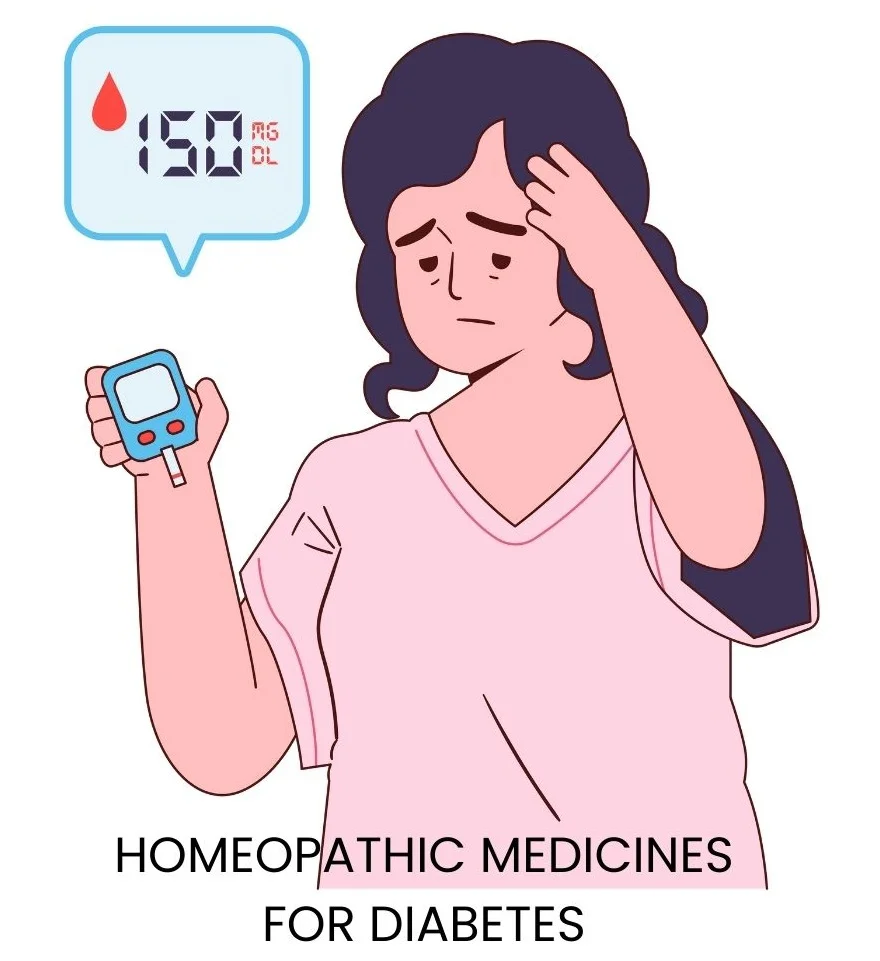
Table of Contents
ToggleHow Does Homeopathy Approach Diabetes?
Classical homeopathy follows an individualized approach based on the person’s complete symptom picture.
During a consultation, a homeopathic physician may explore several aspects of the patient’s health.
These may include:
- The history and progression of diabetes.
- Thirst and appetite.
- Food preferences and eating patterns.
- Energy levels and fatigue.
- Sleep quality.
- Digestive complaints.
- Skin symptoms.
- Temperature preferences.
- Emotional wellbeing and stress.
- Family history and general health.
- Current medicines and relevant laboratory reports.
These details contribute to the overall case assessment.
In traditional homeopathic practice, remedy selection considers the totality of symptoms rather than relying on the disease name alone.
For example, two people with type 2 diabetes may both experience fatigue and excessive thirst, yet have different associated symptoms and constitutional characteristics. Their traditional remedy assessments may therefore differ.
Individualization is a central principle of classical homeopathy.
THE ROLE OF HOMEOPATHY IN DIABETES MANAGEMENT
💡 Note: Always consult a qualified homeopath for constitutional prescribing. Potency and frequency may vary based on individual case.
TOP HOMEOPATHIC MEDICINES FOR DIABETES
Below is a detailed guide on homeopathic medicines for diabetes, focusing on specific symptoms and providing insights on how these remedies work.
1. SYZYGIUM JAMBOLANUM (JAMBOL)
Best for: Lowering blood sugar levels naturally
Symptoms Treated
- High blood sugar with associated symptoms like excessive thirst, frequent urination, and general weakness.
- Skin ulcers caused by poorly managed diabetes.
How It Works
- Syzygium Jambolanum is one of the most frequently prescribed homeopathic remedies for lowering blood sugar levels.
- It is known for its ability to reduce blood sugar quickly and effectively.
- It helps manage polyuria (excessive urination), a common symptom in diabetes, and can also aid in the healing of diabetic ulcers.
- Many patients experience a reduction in sugar in the urine after using this remedy.
Dosage
Commonly used in the mother tincture (Q) form, taken in 10-15 drops, twice daily.
Alternatively, 30C potency can be taken 2-3 times a day for long-term management of blood sugar levels.
2. PHOSPHORICUM ACIDUM (PHOSPHORIC ACID)
Best for: Fatigue and weakness associated with diabetes
Symptoms Treated
- Extreme fatigue, both mental and physical.
- Listlessness and apathy towards life and daily activities.
- Weakness that worsens after emotional stress, particularly grief.
How It Works
- Phosphoric Acid is used for diabetes patients who experience debilitating weakness and fatigue.
- These individuals may feel emotionally drained, and their exhaustion can significantly affect their quality of life.
- This remedy helps rejuvenate both the body and mind by restoring energy and improving mental clarity.
- It is especially helpful for diabetics who are emotionally sensitive, fatigued, or apathetic.
Dosage
Typically used in 30C potency, 2-3 times daily.
For chronic fatigue, higher potencies like 200C may be recommended once a week.
3. URANIUM NITRICUM
Best for: Diabetes with weight loss and excessive urination
Symptoms Treated
- Unintended weight loss despite a normal or increased appetite.
- Excessive thirst (polydipsia) and frequent urination (polyuria).
- Weak digestion and symptoms like nausea or vomiting.
How It Works
- Uranium Nitricum is particularly effective for patients who experience significant weight loss due to diabetes.
- It also helps regulate urinary functions by reducing the frequency and volume of urination.
- This remedy not only addresses sugar imbalances but also strengthens digestion, reducing symptoms like nausea and vomiting associated with uncontrolled diabetes.
Dosage
30C potency taken 2-3 times daily is common, but for chronic symptoms, a higher potency like 200C may be used once a week.
4. NATRUM MURIATICUM (NAT MUR)
Best for: Diabetes worsened by emotional stress or grief
Symptoms Treated
- Emotional sensitivity and a tendency to bottle up feelings.
- Cravings for salty foods and tendency toward bloating or water retention.
- Symptoms like dry skin and frequent urination.
How It Works
- Natrum Muriaticum is particularly useful for diabetic patients whose condition is exacerbated by emotional stress or grief.
- These individuals tend to suppress their emotions, leading to worsening of their diabetic symptoms.
- Nat Mur helps in balancing these emotional states, reducing water retention and improving overall metabolic function, which can help in managing blood sugar levels.
Dosage
This remedy is typically used in 30C potency, 2-3 times daily.
For severe emotional distress, 200C may be used once a week.
5. ARSENICUM ALBUM
Best for: Weakness, restlessness, and anxiety in diabetics
Symptoms Treated
- Weakness that leads to a feeling of exhaustion.
- Anxiety and restlessness with a fear of death or something bad happening.
- Burning sensations during urination or in ulcers.
How It Works
- Arsenicum Album is helpful for diabetic patients who experience extreme weakness, restlessness, and anxiety.
- It is also beneficial for treating complications like skin ulcers and poor circulation, which are common in poorly managed diabetes.
- The burning sensations often associated with diabetic neuropathy or ulcers can also be alleviated with this remedy.
Dosage
Commonly used in 30C potency, 2-3 times daily.
For severe weakness or anxiety, 200C can be taken once a week under professional supervision.
6. INSULINUM
Best for: Enhancing insulin function
Symptoms Treated
- Patients with diabetes who struggle to maintain normal blood sugar levels due to poor insulin production or insulin resistance.
- Uncontrolled sugar levels, despite dietary or medication efforts.
How It Works
- Insulinum, prepared from the pancreatic hormone insulin, is used to improve the body’s ability to produce or utilize insulin effectively.
- It can be beneficial for both type 1 and type 2 diabetes patients.
- While it is not a substitute for conventional insulin therapy, it can complement treatment by enhancing the body’s insulin function.
Dosage
Typically used in 30C potency, 2-3 times daily, or in combination with other homeopathic remedies depending on individual symptoms.
7. ABROMA AUGUSTA
Best for: Diabetes with neuropathy and fatigue
Symptoms Treated
- Diabetic neuropathy with numbness, tingling, or burning sensations in the extremities.
- General fatigue and weakness.
- Excessive thirst and frequent urination.
How It Works
- Abroma Augusta is particularly beneficial for diabetic neuropathy, a common complication of diabetes where patients experience nerve damage leading to pain, numbness, or tingling sensations.
- This remedy helps alleviate these symptoms while also addressing the associated fatigue and frequent urination.
Dosage
Mother tincture (Abroma Augusta Q) is commonly used at 10-15 drops in water, twice daily, or 30C potency 2-3 times a day for ongoing symptom management.
8. GYMNEMA SYLVESTRE
Best for: Regulating blood sugar and reducing sugar cravings
Symptoms Treated
- Elevated blood sugar levels in both type 1 and type 2 diabetes.
- Sugar cravings, which make it difficult for diabetics to manage their condition.
How It Works
- Gymnema Sylvestre is a well-known herb used in both homeopathic and herbal medicine for diabetes.
- It works by lowering blood sugar levels and reducing the craving for sugary foods.
- It can also help stimulate insulin production in the pancreas, making it particularly useful for type 2 diabetes patients.
Dosage
Typically used in mother tincture form (Gymnema Sylvestre Q), 10 drops in water, twice daily.
9. THUJA OCCIDENTALIS
Best for: Diabetics with skin conditions or insulin resistance
Symptoms Treated
- Diabetics who develop skin issues like warts, eruptions, or ulcers.
- Individuals with insulin resistance and obesity-related complications.
How It Works
- Thuja is particularly beneficial for diabetics who develop skin conditions, such as warts or ulcers, often as a result of insulin resistance.
- This remedy also helps with weight management, which can improve insulin sensitivity in type 2 diabetes patients.
Dosage
30C potency, 2-3 times daily, or 200C once a week for insulin resistance issues, particularly when skin conditions are present.
10. NUX VOMICA
Best for: Diabetes worsened by stress and overeating
Symptoms Treated
- Diabetics who experience stress-induced blood sugar spikes.
- Digestive issues such as constipation, bloating, and indigestion.
- A tendency to overeat, particularly rich or fatty foods.
How It Works
- Nux Vomica is ideal for patients whose diabetes worsens due to stress, poor dietary habits, or overindulgence.
- Who it helps: Diabetics whose condition is worsened by stress, irregular diet, and digestive problems.
Dosage
30C potency, 2-3 times daily.
For chronic stress-related diabetes, 200C once a week may be beneficial.
Remember: These are traditional remedy pictures, not a prescribing chart for controlling blood glucose. Individualized case-taking is central to classical homeopathy.
Can Homeopathy Reduce Insulin Dependency?
Many people exploring homeopathy for diabetes want to understand whether their insulin requirements might change.
Insulin needs vary according to the type of diabetes, remaining insulin production, insulin resistance, nutrition, physical activity, other medical conditions and current medication.
In some people with type 2 diabetes, sustained improvements in glucose control may lead a treating clinician to reassess medication requirements.
However, reliable clinical evidence has not established homeopathy as a means of reducing insulin dependency.
People with type 1 diabetes must continue insulin. Those with type 2 diabetes should make medication changes only under appropriate medical supervision.
If you are interested in homeopathy, discuss your health goals with a qualified homeopathic physician and your diabetes-care clinician. Regular glucose monitoring remains important.
Homeopathy Alongside Conventional Diabetes Care
People interested in homeopathy may wish to incorporate it into a broader approach to their health.
A coordinated healthcare plan can include the following.
Continue prescribed medication. Use insulin and other diabetes medicines as directed by the treating clinician.
Monitor blood glucose. Regular monitoring helps identify changes and supports informed treatment decisions.
Discuss homeopathic products. Inform your healthcare professionals about the exact preparations you use, especially mother tinctures, low-dilution preparations and combination products.
Attend follow-up appointments. HbA1c testing and other assessments help evaluate long-term glucose control.
Pay attention to concerning symptoms. Severe hypoglycaemia, persistent vomiting, dehydration, confusion or symptoms of diabetic ketoacidosis require urgent medical assessment.
A homeopathic consultation can focus on the individual’s broader symptom picture while necessary diabetes treatment continues.
Lifestyle Measures That Support Diabetes Management
Lifestyle habits are an important part of diabetes care.
- Follow a Balanced Eating Pattern
Build meals around suitable portions of vegetables, protein-rich foods, legumes, whole grains and other minimally processed foods.
An appropriate eating plan should reflect the individual’s medical needs, food preferences, culture and treatment regimen.
- Stay Physically Active
Regular physical activity can improve insulin sensitivity and support cardiovascular health.
Walking, resistance training and other suitable activities can be incorporated according to fitness level and medical advice.
People taking insulin or medicines that can cause low blood glucose should discuss exercise-related precautions with their healthcare professional.
- Prioritize Sleep
Adequate sleep supports general health and helps maintain a consistent daily routine.
Maintain regular sleeping hours and seek medical advice if persistent insomnia or symptoms of sleep apnoea occur.
- Monitor Progress
Blood glucose records and periodic HbA1c measurements help determine whether the treatment plan is working.
Blood pressure, cholesterol, kidney function, eye health and foot health also require attention according to the individual’s needs.
- Manage Stress
Relaxation, mindfulness, breathing exercises and enjoyable daily activities may support emotional wellbeing.
These practices can complement diabetes care.
Frequently Asked Questions
Which homeopathic medicine is best for diabetes?
There is no single remedy for everyone. Traditional homeopathic prescribing is individualized according to the person’s complete symptom picture and medical history.
Can homeopathy help with type 2 diabetes?
Homeopathy is used by some practitioners as an individualized complementary approach. For personalized guidance, consult a qualified homeopathic physician.
Can homeopathy reduce insulin dependency?
Insulin requirements vary between individuals. Discuss your treatment goals with a qualified homeopathic physician and your diabetes-care clinician. Never reduce or stop insulin without medical supervision.
Can people with type 1 diabetes use homeopathy?
People with type 1 diabetes who are interested in complementary care should discuss it with their healthcare team. Insulin must never be stopped or replaced with homeopathy.
Can homeopathy be used with diabetes medicines?
Discuss the exact homeopathic product and preparation with your healthcare professionals, particularly if it contains measurable active ingredients or multiple components.
Should I consult a homeopathic physician for diabetes?
Yes, if you are interested in an individualized homeopathic assessment. Share your medical history, current medicines and relevant laboratory reports during the consultation.
Final Thoughts
Diabetes management is a long-term process involving nutrition, physical activity, medication, monitoring and attention to overall wellbeing.
Homeopathy offers a traditional system of individualized case-taking in which remedies are selected according to the person’s broader symptom picture rather than the diagnosis alone.
For people interested in homeopathy, a detailed consultation provides an opportunity to discuss their health history, associated complaints and questions about complementary care.
The best starting point is a thorough understanding of your individual health needs. Consult a qualified homeopathic physician for personalized guidance, and continue appropriate diabetes monitoring and prescribed treatment.