
Uterine polyps (also called endometrial polyps) are small, soft growths on the inner wall of the uterus. They are usually non-cancerous but can cause troublesome symptoms.
Causes / Risk Factors include
- Hormonal imbalance (especially excess estrogen).
- Perimenopause or post-menopause.
- Obesity.
- High blood pressure.
- Fertility treatments.
Common Symptoms
- Heavy or irregular menstrual bleeding.
- Bleeding between periods.
- Post-menopausal bleeding.
- Infertility or difficulty conceiving.
- Pelvic discomfort.
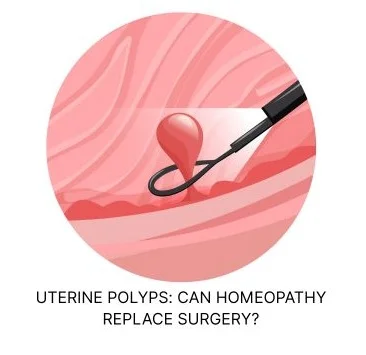
Table of Contents
ToggleConventional Treatment: The Surgical Approach
Doctors usually recommend:
- Polypectomy – surgical removal of polyps.
- Hysteroscopy – examination and removal via camera-guided surgery.
- Hysterectomy – in severe, recurring cases (removal of the uterus).
While surgery is effective, it may have:
- Risks of anesthesia.
- Possible recurrence (polyps may grow back).
- Cost and recovery time.
This is why many women explore:
👉 Can homeopathy help manage polyps and reduce or avoid surgery?
Can Homeopathy Replace Surgery?
Homeopathy does not cut out polyps like surgery, but it aims to:
- Shrink existing polyps naturally by correcting hormonal imbalance.
- Control symptoms like heavy bleeding, pain, and fatigue.
- Prevent recurrence by addressing root causes (hormonal disturbance, constitution).
- Offer a gentle, non-invasive approach without side effects.
However, it’s important to be realistic:
- Small or moderate polyps with symptoms may respond well.
- Very large polyps, precancerous changes, or emergency bleeding → Surgery is safer.
- Homeopathy works best as an early intervention or long-term preventive care.
Top Homeopathic Remedies for Uterine Polyps
Thuja Occidentalis – The Classic Remedy for Growths
- Keynote use: Considered the number one remedy for all abnormal growths — warts, polyps, fibroids.
- Gynecological symptoms:
- Uterine polyps with irregular, excessive bleeding.
- Greenish, offensive vaginal discharge.
- Sense of weight or fullness in the pelvic region.
- General symptoms:
- Warts on skin, nail deformities, oily face.
- Feels as if something alive is moving in the abdomen.
- Constitutional picture: Women who feel embarrassed about illness, secretive, anxious. Often chilly, worse in damp weather.
- Modalities:
- Worse: At night, dampness, after vaccination.
- Better: Heat, dry air.
- Dose: 30C once daily for several weeks; mother tincture (Q) 5–10 drops twice daily for general growth tendency.
Calcarea Carbonica – For Hormonal Imbalance and Recurrent Growths
- Keynote use: For women who develop fibroids, cysts, and polyps repeatedly due to poor calcium metabolism and hormonal imbalance.
- Gynecological symptoms:
- Heavy, prolonged menstrual bleeding with clots.
- Periods too early and too profuse.
- Leucorrhoea (white discharge), thick and milky.
- General symptoms:
- Weak digestion, craving eggs and indigestible things.
- Easy fatigue, breathlessness on climbing stairs.
- Profuse sweating, especially on head.
- Constitutional picture: Fair, overweight women who are chilly, easily exhausted, and anxious about health.
- Modalities:
- Worse: Cold, damp, exertion.
- Better: Dry weather, rest.
- Dose: 30C once daily; 200C weekly for chronic cases under guidance.
Sabina – For Severe Bleeding from Polyps
- Keynote use: Best suited for profuse uterine bleeding with clots due to uterine growths.
- Gynecological symptoms:
- Bright red bleeding with dark clots.
- Bleeding between periods or after exertion.
- Pain radiates from uterus to thighs.
- General symptoms:
- Miscarriage tendency in third month.
- Excessive sensitivity to music (it worsens symptoms).
- Constitutional picture: Plethoric (full-blooded), sensitive women prone to hemorrhages.
- Modalities:
- Worse: Least motion, heat.
- Better: Rest in cool environment.
- Dose: 30C 2–3 times daily during heavy bleeding; 200C once weekly in recurrent hemorrhage.
Fraxinus Americana – The Uterine Tonic
- Keynote use: A powerful tonic for uterine conditions including polyps, fibroids, prolapse.
- Gynecological symptoms:
- Enlarged uterus with bearing-down pains.
- Polyps with cramping pain and irregular cycles.
- Associated prolapse sensation (“uterus falling down”).
- General symptoms:
- Backache, weakness, faintness.
- Constitutional picture: Women who feel weak, tired, and drained by long-standing uterine disorders.
- Dose: Mother tincture (Q), 10 drops in water, twice daily.
Trillium Pendulum – For Flooding Bleeding and Anemia
- Keynote use: Best when polyps cause gushing uterine bleeding leading to weakness.
- Gynecological symptoms:
- Profuse bleeding that worsens on slightest motion.
- Severe back and hip pains.
- Bleeding makes patient faint, pale, and weak.
- General symptoms:
- Great weakness, faintness.
- Cold sweat, trembling.
- Dose: Mother tincture (Q) 10 drops in water, 2–3 times daily.
Sepia – For Hormonal and Emotional Imbalance
- Keynote use: Excellent for uterine disorders linked with hormonal changes and emotional dullness.
- Gynecological symptoms:
- Polyps with irregular, painful periods.
- Bearing-down sensation in pelvis, as if everything will fall out.
- Vaginal dryness in menopause.
- General symptoms:
- Indifference to loved ones, irritability, desire for solitude.
- Aversion to sex.
- Constitutional picture: Overworked, emotionally drained women (e.g., mothers, caregivers).
- Modalities:
- Worse: Evenings, damp weather.
- Better: Vigorous exercise, warmth.
- Dose: 30C once daily; 200C weekly in chronic cases.
Lachesis – For Menopausal Polyps with Bleeding
- Keynote use: Best during menopause, especially with climacteric flushes and bleeding.
- Gynecological symptoms:
- Bleeding after menopause.
- Cannot bear tight clothing around waist.
- Hot flushes, uterine congestion.
- General symptoms:
- Loquacious (talks excessively), jealousy, suspicion.
- Modalities:
- Worse: After sleep, at night.
- Better: Open air, menstrual flow.
- Dose: 200C once weekly.
Phosphorus – For Weak Constitutions with Bright Red Bleeding
- Keynote use: Tall, lean, sensitive women who bleed easily.
- Gynecological symptoms:
- Bright red, profuse bleeding from uterus.
- Tendency to develop growths due to weak constitution.
- Burning pains in uterus.
- General symptoms:
- Craving cold drinks, ice cream.
- Anxiety about health, fear of being alone.
- Constitutional picture: Delicate, sensitive women with nervous, anxious temperament.
- Dose: 30C once daily for a few days.
Biochemic Remedies for Uterine Polyps (Tissue Salts)
Calcarea Fluorica (Calc Fluor)
- Best salt for hard growths, fibroids, and polyps.
- Strengthens connective tissue, prevents recurrence.
- Dose: 6X – 4 tablets, 2–3 times daily.
Calcarea Phosphorica (Calc Phos)
- Supports uterine health, rebuilds strength in weak constitutions.
- Dose: 6X – 4 tablets, 2–3 times daily.
Kali Phosphoricum (Kali Phos)
- Nerve tonic, reduces fatigue, depression from heavy bleeding.
- Dose: 6X – 4 tablets, 3 times daily.
Ferrum Phosphoricum (Ferrum Phos)
- For anemia (low blood levels) from long-term heavy bleeding.
- Dose: 6X – 4 tablets, 2 times daily.
Lifestyle & Holistic Tips for Managing Uterine Polyps
- Dietary changes
- Avoid excess estrogen-rich foods (soy, processed foods, plastics).
- Eat fresh vegetables, fruits, whole grains.
- Include iron-rich foods (spinach, beetroot, dates) to prevent anemia.
- Exercise
- Gentle yoga, walking, pelvic strengthening exercises.
- Stress management
- Meditation, pranayama (deep breathing), journaling.
- Regular check-ups
- Pelvic ultrasound to monitor size of polyps.
- Pap smear if advised by doctor.
- Avoid hormone disruptors
- Limit pesticides, plastics, synthetic cosmetics.
When Surgery May Still Be Needed
While homeopathy helps many, surgery may be unavoidable if:
- Polyp is very large and blocking uterus.
- Severe uncontrollable bleeding.
- Suspicion of cancerous changes.
- Failed attempts with homeopathy over time.
Conclusion: Can Homeopathy Replace Surgery for Uterine Polyps?
The honest answer is: sometimes yes, sometimes no.
- Small to moderate polyps: Homeopathy with remedies like Thuja, Calcarea Carb, Sabina, Fraxinus, and tissue salts (Calc Fluor, Calc Phos) can shrink polyps, regulate cycles, and prevent recurrence.
- Large polyps with heavy bleeding: Surgery may be required for safety, but homeopathy can be continued after surgery to prevent new growths.
👉 In short: Homeopathy can reduce the need for surgery in many cases, but medical supervision is essential.
A combined approach ensures safety and long-term wellness.