
Spring is a season of renewal—flowers bloom, trees regain their leaves, and nature becomes vibrant again.
Yet for millions of people, this beautiful season also brings persistent sneezing, runny nose, watery eyes, itching, and fatigue.
These symptoms are collectively known as spring allergies or seasonal allergic rhinitis.
Seasonal allergies occur when the immune system reacts excessively to environmental allergens such as pollen from grasses, trees, and weeds.
These allergens enter the respiratory tract and stimulate immune cells to release inflammatory mediators like histamine, leading to irritation of the nasal mucosa and conjunctiva.
THE ROLE OF HOMEOPATHY IN MANAGING ALLERGIES
TOP HOMOEOPATHIC TREATMENTS FOR CHILDHOOD ALLERGIES
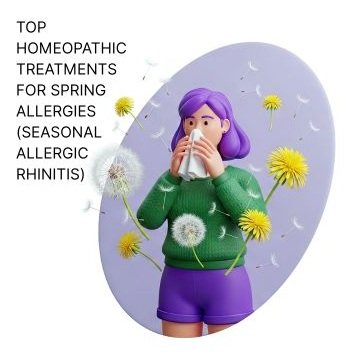
Common symptoms include:
- Repeated sneezing
- Watery or blocked nose
- Itching in the nose or throat
- Watery, red, or burning eyes
- Post-nasal drip
- Head heaviness and fatigue
While conventional treatments often rely on antihistamines, nasal sprays, and steroids, these therapies mainly aim to suppress the allergic reaction temporarily.
Homeopathy approaches allergies from a different perspective.
In homeopathic philosophy, allergic conditions represent a disturbance of the body’s vital force, resulting in hypersensitivity to otherwise harmless environmental substances. Instead of suppressing the reaction, homeopathic treatment aims to:
- Restore immune balance
- Reduce hypersensitivity
- Strengthen the body’s natural defense mechanisms
Over time, many patients notice that their allergic episodes become less severe, less frequent, and easier to manage.
For homeopathic practitioners, spring allergies offer an excellent opportunity to apply individualized prescribing based on characteristic symptoms.
Table of Contents
ToggleKey Homeopathic Medicines for Spring Allergies
The following remedies are among the most frequently indicated medicines in cases of seasonal allergic rhinitis.
Each remedy has its own distinct symptom picture, which helps the practitioner select the most suitable medicine.
Allium Cepa
Allium cepa is one of the most well-known remedies for acute allergic rhinitis with profuse nasal discharge.
The remedy is prepared from the common onion, whose natural effects closely resemble the symptoms of hay fever.
Key Indications
- Profuse watery nasal discharge
- Burning irritation in the nose
- Frequent sneezing
- Redness of the nostrils
- Bland tears from the eyes
Characteristic Feature
The nasal discharge is acrid and irritating, often excoriating the skin around the nostrils and upper lip. In contrast, the tears flowing from the eyes are mild and non-irritating.
This contrast between acrid nasal discharge and bland lacrimation is a very important prescribing clue.
Modalities
Worse:
- Warm rooms
- Evening
- Exposure to flowers or pollen
Better:
- Fresh air
- Open spaces
- Cool environment
Suggested Dose
30C potency can be given 2–3 times daily during acute allergic attacks. In recurrent seasonal allergies, a higher potency such as 200C may be prescribed occasionally under professional guidance.
Sabadilla
Sabadilla is one of the most important remedies for violent sneezing attacks triggered by pollen exposure. It is especially useful when sneezing occurs in repeated bursts.
Key Indications
- Repeated spasmodic sneezing
- Tickling sensation in the nose
- Profuse watery nasal discharge
- Itching of nose and palate
- Hypersensitivity to pollen or odors
Characteristic Feature
The patient often experiences intense tickling deep inside the nose, leading to rapid successive sneezing episodes.
There may also be itching in the throat or palate, causing the patient to rub the nose frequently.
Modalities
Worse:
- Cold air
- Exposure to pollen
- Strong smells
Better:
- Warm drinks
- Warm room
Suggested Dose
30C potency 2–3 times daily during active symptoms. In chronic recurrent allergies, higher potencies may be used at longer intervals.
Natrum Muriaticum
Natrum muriaticum is particularly useful in chronic seasonal allergies that recur every year at the same time.
It often suits individuals with a tendency toward dryness of mucous membranes and repeated sneezing attacks.
Key Indications
- Paroxysmal sneezing
- Watery nasal discharge resembling egg white
- Alternating runny nose and nasal blockage
- Loss of smell during allergy episodes
- Frontal headache with nasal symptoms
Characteristic Feature
The patient may experience continuous sneezing in the morning, followed by nasal obstruction later in the day.
Modalities
Worse:
- Morning
- Sun exposure
- Emotional stress
Better:
- Open air
- Gentle movement
Suggested Dose
200C potency once weekly or once every two weeks in chronic seasonal cases under the supervision of a homeopathic practitioner.
Arsenicum Album
Arsenicum album is an important remedy when allergic symptoms are associated with burning irritation and marked weakness.
Key Indications
- Burning nasal discharge
- Sneezing with exhaustion
- Restlessness and anxiety
- Chilly patient who prefers warmth
- Nasal irritation with dryness
Characteristic Feature
Patients often appear anxious, restless, and fatigued, and they feel worse in cold air.
Modalities
Worse:
- After midnight
- Cold air
- Cold drinks
Better:
- Warm drinks
- Warm environment
Suggested Dose
30C potency once or twice daily during acute symptoms. Higher potencies may be considered in recurrent cases.
Euphrasia
Euphrasia is one of the most valuable remedies when eye symptoms dominate the allergic picture.
Key Indications
- Profuse watery eyes
- Burning and irritation of the eyes
- Redness of conjunctiva
- Sensitivity to light
- Mild nasal discharge
Characteristic Feature
In Euphrasia cases, the eye discharge is acrid and irritating, while the nasal discharge remains relatively mild.
This pattern is the reverse of Allium cepa.
Modalities
Worse:
- Bright light
- Wind
- Evening
Better:
- Dark rooms
- Resting the eyes
Suggested Dose
30C potency 2–3 times daily during allergic episodes.
Arundo Mauritanica
Arundo is an excellent remedy when intense itching is the dominant feature of the allergy.
Key Indications
- Severe itching in the nose
- Itching of palate
- Repeated sneezing
- Watery nasal discharge
- Irritation in throat
Characteristic Feature
Patients often feel itching in the roof of the mouth, leading them to rub the palate with their tongue.
Modalities
Worse:
- Pollen exposure
- Dust
- Warm rooms
Better:
- Fresh air
Suggested Dose
30C potency once or twice daily during allergy season.
Wyethia
Wyethia is a lesser-known but very useful remedy when allergies produce dry irritation rather than profuse discharge.
Key Indications
- Dry itching in posterior nose
- Persistent throat irritation
- Itching of soft palate
- Desire to scratch the throat
Characteristic Feature
The patient constantly attempts to clear or scratch the throat, as if something is irritating deep in the nasal passages.
Modalities
Worse:
- Warm rooms
- Dry air
Better:
- Cool fresh air
Suggested Dose
30C potency once or twice daily during allergy attacks.
Pulsatilla
Pulsatilla is commonly indicated when allergic rhinitis produces thick yellow or green nasal discharge rather than watery secretions.
Key Indications
- Thick bland nasal discharge
- Nasal blockage in warm rooms
- Symptoms improve in fresh air
- Reduced thirst
Characteristic Feature
Patients often feel better outdoors and worse in closed warm rooms.
Modalities
Worse:
- Warm rooms
- Evening
Better:
- Fresh air
- Gentle movement
Suggested Dose
30C potency once or twice daily depending on symptom intensity.
Kali Iodatum
Kali iodatum is useful in severe allergic rhinitis with intense irritation and frontal sinus pain.
Key Indications
- Profuse watery nasal discharge
- Violent sneezing
- Burning in nose and throat
- Frontal headache
Characteristic Feature
The nasal discharge is often copious and irritating, accompanied by sinus pressure.
Modalities
Worse:
- Warm rooms
- Night
Better:
- Fresh air
Suggested Dose
30C potency once or twice daily during acute symptoms.
Nux Vomica
Nux vomica is frequently indicated in individuals with sedentary lifestyle, digestive disturbances, and hypersensitivity to environmental stimuli.
Key Indications
- Sneezing in the early morning
- Nasal blockage at night
- Irritability and hypersensitivity
- Cold sensitivity
Characteristic Feature
The patient often experiences a blocked nose at night but a runny nose during the day.
Modalities
Worse:
- Early morning
- Cold air
- Overwork or stress
Better:
- Warm environment
- Rest
Suggested Dose
30C potency once or twice daily during allergy episodes.
Biochemic Medicines for Spring Allergies
Biochemic tissue salts can be used as supportive remedies to improve mucous membrane health and cellular balance.
Kali Muriaticum
Useful in cases with:
- Thick white nasal discharge
- Nasal blockage
- Ear congestion
Dose: 6X potency, 4 tablets three times daily
Natrum Muriaticum
Indicated in:
- Watery nasal discharge
- Repeated sneezing
- Dry mucous membranes
Dose: 6X potency, 4 tablets three times daily
Kali Sulphuricum
Useful in later stages of allergy with:
- Yellow nasal discharge
- Catarrhal inflammation
Dose: 6X potency, 4 tablets three times daily
Homeopathic Approach to Prescribing in Spring Allergies
For effective homeopathic prescribing, practitioners should carefully analyze:
- Nature of nasal discharge
- Sneezing pattern
- Eye symptoms
- Modalities (better or worse factors)
- Patient temperament and constitution
Correct remedy selection is based on individualized symptom similarity rather than disease diagnosis alone.
Frequently Asked Questions
Can homeopathy really help seasonal allergies?
- Yes. Homeopathy works by stimulating the body’s natural healing response, helping the immune system become less hypersensitive to allergens.
- Many patients experience gradual reduction in the intensity and frequency of seasonal allergies.
Are homeopathic medicines safe?
- Homeopathic medicines are prepared through a process of serial dilution and potentization, making them gentle and generally safe when used appropriately under professional guidance.
How quickly do homeopathic remedies work?
- Acute allergic symptoms may improve within hours or a few days.
- Chronic allergic tendencies may require constitutional treatment for several months.
Can homeopathy prevent allergies from returning every year?
- Many patients undergoing proper homeopathic treatment report that their allergies become milder each season or disappear entirely over time, as the underlying susceptibility is addressed.
Can homeopathy cure spring allergies permanently?
- Homeopathy aims to reduce hypersensitivity and strengthen the immune system, which may gradually decrease the severity and recurrence of seasonal allergies.
Which homeopathic medicine is best for sneezing allergies?
- Remedies such as Allium Cepa, Sabadilla, and Natrum Muriaticum are commonly used depending on the individual symptom pattern.
Are homeopathic medicines safe for seasonal allergies?
- Homeopathic medicines are highly diluted and generally considered safe when used appropriately under professional guidance.
Conclusion
Spring allergies can significantly affect daily comfort and productivity. While conventional medicines may temporarily suppress symptoms, homeopathy offers a holistic and individualized approach that aims to restore immune balance.
Through careful remedy selection and constitutional treatment, homeopathy can help patients achieve lasting relief and improved resistance to seasonal allergens.
For individuals seeking a gentle, natural, and long-term approach to allergy management, homeopathy remains a valuable therapeutic option.