
Parkinson’s disease is a chronic (long-term) neurological condition that mainly affects movement, but over time it also impacts emotions, sleep, digestion, and overall quality of life.
It occurs due to a gradual loss of dopamine-producing cells in the brain. Dopamine is a chemical messenger that helps control smooth, coordinated movement.
People living with Parkinson’s often describe their experience as:
- “My body doesn’t respond the way it used to”
- “My movements feel slow and stiff”
- “I feel shaky, anxious, or tired”
- “Simple daily tasks take much more effort”
Parkinson’s does not affect everyone in the same way. Symptoms vary greatly from person to person and progress at different speeds.
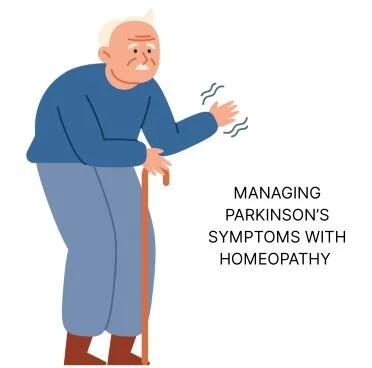
Table of Contents
ToggleCommon Symptoms of Parkinson’s Disease
Movement-Related Symptoms
- Tremors (shaking), often starting in one hand
- Muscle stiffness or rigidity
- Slowness of movement (bradykinesia)
- Difficulty with balance and walking
- Reduced facial expression
Non-Motor Symptoms (Often Overlooked)
- Anxiety or depression
- Sleep disturbances
- Fatigue
- Constipation and digestive problems
- Memory and concentration issues
- Emotional changes
These non-motor symptoms often affect quality of life more than movement symptoms, especially in later stages.
Where Homeopathy Fits in Parkinson’s Care
Homeopathy can play a valuable supportive role by focusing on:
- Individual symptom patterns
- Emotional wellbeing
- Nervous system resilience
- Daily comfort and quality of life
Homeopathy works by supporting the body’s self-regulatory capacity, not by forcing or suppressing symptoms.
How Homeopathy Can Support People with Parkinson’s
Homeopathy may help by:
- Reducing muscle stiffness and rigidity
- Supporting control over tremors (in some individuals)
- Improving sleep quality
- Reducing anxiety, restlessness, or emotional distress
- Supporting digestion and energy levels
- Helping patients cope better emotionally with a chronic condition
The focus is not on the disease name, but on how the disease affects the individual.
Homeopathic Medicines for Managing Parkinson’s Symptoms
Each medicine is chosen based on how the person feels, not just the diagnosis.
Rhus Toxicodendron – For Stiffness That Improves with Movement
What the person usually feels
- Body feels very stiff, especially after resting
- Getting up from bed or chair is difficult
- First few steps are painful or hard
- Once they start moving slowly, they feel a little better
Common daily complaints
- “My body is stiff when I wake up”
- “After sitting, I can’t move easily”
- “Movement helps, but rest makes me worse”
How this medicine helps
Rhus Tox helps when muscles and joints feel tight and rigid, but gentle movement brings relief.
It supports flexibility and reduces stiffness over time.
Expected support
- Easier movement after rest
- Less stiffness in joints and muscles
- Better comfort during walking
Dosage
Rhus Toxicodendron 30C – once daily or as advised
Gelsemium – For Trembling with Weakness and Heaviness
What the person usually feels
- Hands or body tremble
- Legs feel heavy and weak
- Person feels tired very easily
- Movements feel slow and effortful
Common daily complaints
- “My hands shake when I try to do something”
- “My legs feel heavy”
- “I feel weak and sleepy”
How this medicine helps
Gelsemium helps when tremors come with weakness rather than restlessness.
It gently supports nerve control and reduces trembling linked to fatigue.
Expected support
- Slight reduction in trembling
- Feeling less heavy and weak
- Better coordination
Dosage
Gelsemium 30C – once daily or as prescribed
Agaricus Muscarius – For Shaking, Jerking, or Twitching Movements
What the person usually feels
- Shaking or jerking movements
- Sudden muscle twitching
- Difficulty controlling fine movements
- Unsteady coordination
Common daily complaints
- “My hands move suddenly”
- “My muscles twitch on their own”
- “I can’t control my movements properly”
How this medicine helps
Agaricus works on abnormal nerve signals that cause shaking and jerky movements.
Expected support
- Better control over involuntary movements
- Reduced twitching or jerking
- Improved coordination
Dosage
Agaricus Muscarius 30C – once daily (under guidance)
Causticum – For Progressive Stiffness and Weakness
What the person usually feels
- Gradual increase in stiffness
- Weak muscles
- Difficulty walking or maintaining posture
- Feels emotionally sensitive or sad
Common daily complaints
- “My walking has become slow”
- “My muscles feel weak”
- “I feel emotionally sensitive”
How this medicine helps
Causticum supports nerve–muscle communication and helps when stiffness and weakness slowly increase.
Expected support
- Improved muscle control
- Slight improvement in walking comfort
- Emotional steadiness
Dosage
Causticum 30C or 200C – as advised
Zincum Metallicum – For Restlessness and Continuous Movement
What the person usually feels
- Constant restlessness, especially in legs
- Cannot keep legs still
- Feels mentally exhausted
Common daily complaints
- “I keep moving my legs”
- “I feel restless even when tired”
- “My mind feels exhausted”
How this medicine helps
Zincum helps calm an overworked nervous system, especially when restlessness is prominent.
Expected support
- Reduced restlessness
- Better mental calmness
- Improved sleep quality
Dosage
Zincum Metallicum 30C – once daily
Arsenicum Album – For Anxiety, Fear, and Inner Restlessness
What the person usually feels
- Anxiety about health
- Fear of future
- Restlessness, especially at night
- Feels weak but anxious
Common daily complaints
- “I worry a lot about my condition”
- “I feel restless and uneasy”
- “I can’t relax”
How this medicine helps
Arsenicum supports emotional stability, reduces anxiety, and helps the person feel more secure.
Expected support
- Reduced anxiety
- Better emotional calm
- Improved sleep
Dosage
Arsenicum Album 30C – once daily
Kali Phosphoricum – For Nervous Exhaustion and Fatigue
What the person usually feels
- Extreme tiredness
- Mental weakness
- Poor sleep
- Emotional drain
Common daily complaints
- “I feel tired all the time”
- “My mind feels weak”
- “Small tasks exhaust me”
How this medicine helps
Kali Phos is a nerve tonic. It nourishes the nervous system and improves stamina.
Expected support
- Better energy
- Improved sleep
- Emotional strength
Dosage
Kali Phosphoricum 6X – 4 tablets twice daily (long-term)
Natrum Muriaticum – For Emotional Withdrawal and Silent Sadness
What the person usually feels
- Withdrawn emotionally
- Keeps feelings inside
- Feels lonely but avoids sympathy
Common daily complaints
- “I don’t like to talk about my feelings”
- “I prefer to be alone”
- “I feel emotionally tired”
How this medicine helps
Natrum Mur helps process silent emotional stress, which often worsens physical symptoms.
Expected support
- Emotional balance
- Better mental calm
- Improved coping
Dosage
Natrum Muriaticum 200C – once every 10–15 days
Silicea – For Weakness and Low Endurance
What the person usually feels
- Weak muscles
- Low stamina
- Slow recovery from fatigue
- Feels cold easily
Common daily complaints
- “I get tired very quickly”
- “I don’t have strength”
- “I feel weak inside”
How this medicine helps
Silicea strengthens long-term nerve and muscle endurance.
Expected support
- Improved stamina
- Better physical resilience
- Gradual strength building
Dosage
Silicea 30C – once daily for a few weeks
Phosphorus – For Emotional Sensitivity and Nervous Weakness
What the person usually feels
- Emotionally sensitive
- Easily overwhelmed
- Weakness with anxiety
Common daily complaints
- “I feel sensitive to everything”
- “I get anxious easily”
- “I need reassurance”
How this medicine helps
Phosphorus supports sensitive nervous systems and emotional wellbeing.
Expected support
- Emotional comfort
- Better nervous stability
- Reduced anxiety
Dosage
Phosphorus 30C – as advised
Biochemic (Tissue Salt) Support
These salts support cells and nerves gently and are safe for long-term use.
- Kali Phosphoricum 6X – nerve strength
- Magnesia Phosphorica 6X – muscle relaxation
- Calcarea Phosphorica 6X – stamina and repair
Dose
4 tablets twice daily for 3–6 months
Lifestyle and Supportive Measures
Homeopathy works best when combined with:
- Regular physiotherapy and movement
- Balanced nutrition
- Adequate hydration
- Emotional support and counselling
- Gentle exercise and stretching
- Strong family and caregiver involvement
Emotional and Psychological Support Matters
Living with Parkinson’s is emotionally challenging.
Fear, frustration, sadness, and grief are natural responses.
Homeopathy addresses the emotional experience of illness, helping patients feel:
- More supported
- Less overwhelmed
- Better able to cope with daily challenges
Final Thoughts
Parkinson’s disease is a lifelong journey, but quality of life can be supported at every stage.
Homeopathy does not claim to cure Parkinson’s—but it can:
- Support symptom management
- Improve comfort and emotional wellbeing
- Strengthen resilience of the nervous system
- Complement medical and rehabilitative care
When used responsibly and integratively, homeopathy can become a gentle companion in managing Parkinson’s symptoms—supporting not just the body, but the person living with the condition.