
Lyme disease is an infection caused primarily by the bacterium Borrelia burgdorferi, transmitted through the bite of infected ticks. It is most common in regions where ticks thrive in wooded or grassy environments.
In its early stage, Lyme disease may produce symptoms such as:
- Fever
- Fatigue
- Muscle aches
- Headache
- Enlarging skin rash (often called a bull’s-eye rash)
With timely treatment, many people recover well. However, some individuals continue to experience lingering symptoms even after conventional treatment.
These persistent symptoms are often referred to as chronic Lyme disease or post-treatment Lyme syndrome.
People experiencing persistent Lyme symptoms may report:
- long-lasting fatigue
- joint pain or stiffness
- nerve discomfort
- headaches
- brain fog or memory issues
- sleep disturbance
- muscle weakness
- emotional stress
These symptoms can fluctuate over time and may affect daily life significantly.
Many patients therefore explore complementary approaches that may support recovery and improve quality of life.
Homeopathy is one such approach that focuses on stimulating the body’s own healing responses rather than directly attacking pathogens.
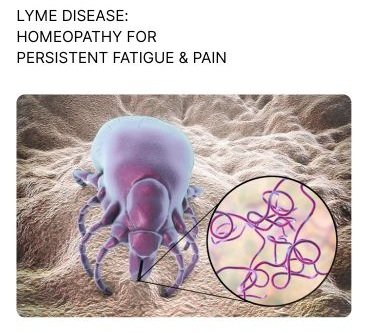
Table of Contents
ToggleHow Homeopathy Approaches Chronic Lyme Symptoms
In homeopathic medicine, chronic illness is viewed as a disturbance in the body’s regulatory systems.
Instead of targeting only the infection itself, homeopathy focuses on the pattern of symptoms the person experiences, including physical discomfort, fatigue, emotional changes, and environmental sensitivities.
A homeopathic practitioner evaluates many aspects of the individual’s condition, such as:
- the nature of joint or nerve pain
• patterns of fatigue
• response to temperature or weather
• sleep disturbances
• mental or emotional changes
• triggers that worsen symptoms
By understanding the overall pattern, the practitioner selects a remedy that closely resembles the individual’s experience.
The goal is to encourage the body to restore balance and improve resilience, which may gradually reduce the intensity of symptoms.
Homeopathic Remedies Often Considered in Chronic Lyme Symptoms
The following remedies are sometimes discussed in homeopathic literature in relation to Lyme-like symptom patterns. Remedy selection should always be individualized.
Ledum Palustre – For Symptoms Following Tick Bites
Ledum Palustre has traditionally been associated with conditions involving puncture wounds or insect bites, including tick bites.
Individuals needing this remedy may experience lingering joint stiffness or discomfort that began after a tick exposure. Pain may feel better with cold applications and worse with warmth.
Some patients report that joint pain appears first in the lower limbs and may move upward through the body over time.
Ledum is often considered when the history of illness clearly begins with an insect or tick bite, and symptoms involve stiffness or soreness in joints.
Typical homeopathic use may involve Ledum 30C or 200C, prescribed under professional supervision.
Rhus Toxicodendron – For Joint Pain and Stiffness
Rhus Toxicodendron is frequently discussed in homeopathy for musculoskeletal pain and stiffness.
People who benefit from this remedy often experience stiffness that improves with gentle movement but worsens after prolonged rest. Morning stiffness and difficulty initiating movement may be noticeable.
In chronic Lyme-related discomfort, the joints may feel stiff, aching, or sore, especially during cold or damp weather.
Rhus Tox corresponds to conditions where the body feels better once movement begins, even though rest initially increases stiffness.
It is commonly used in potencies such as 30C, under guidance from a practitioner.
Borrelia Nosode – For Persistent Lyme-Related Patterns
Borrelia nosode is a homeopathic preparation derived from the organism associated with Lyme disease.
In homeopathic practice, nosodes are sometimes used when symptoms appear to follow a specific infectious history and other remedies have not produced improvement.
Individuals experiencing persistent fatigue, joint discomfort, neurological symptoms, or fluctuating illness patterns after Lyme infection may sometimes be evaluated for this remedy.
Because nosodes act deeply and require careful assessment, Borrelia nosode is typically prescribed only by experienced practitioners.
Arsenicum Album – For Fatigue with Restlessness
Arsenicum Album may be considered when chronic illness produces exhaustion combined with restlessness or anxiety.
Individuals may feel physically weak but mentally restless, often changing positions frequently because they cannot remain comfortable.
Symptoms may worsen at night, and the person may feel chilly and prefer warmth.
Arsenicum Album corresponds to states where fatigue is accompanied by heightened sensitivity and internal agitation.
It is commonly used in 30C potency, though dosing should be individualized.
Phosphoric Acid – For Deep Physical and Mental Exhaustion
Phosphoric Acid is sometimes considered when chronic illness leads to profound fatigue and mental dullness.
The person may feel emotionally flat or indifferent, lacking the motivation that was once present. Concentration may become difficult, and memory may feel weaker.
This remedy corresponds to exhaustion that develops after prolonged stress, illness, or emotional strain.
In chronic Lyme patterns where fatigue and mental depletion dominate the picture, Phosphoric Acid may be evaluated as part of treatment.
Gelsemium – For Weakness with Mental Fog
Gelsemium is often discussed in relation to heavy fatigue, mental fog, and generalized weakness.
Individuals may feel mentally slow, physically tired, and uninterested in activity. The limbs may feel heavy, and concentration may be difficult.
Symptoms may worsen during emotional stress or anticipation.
Gelsemium corresponds to conditions where nervous system exhaustion leads to both mental and physical sluggishness.
Calcarea Carbonica – For Long-Term Fatigue and Weakness
Calcarea Carbonica is sometimes considered when chronic illness produces slow recovery, fatigue, and susceptibility to recurrent infections.
Individuals may feel physically tired easily and may struggle to regain strength after illness.
They may also experience sensitivity to cold and may perspire easily during sleep.
Calcarea Carbonica corresponds to constitutional patterns where metabolism and immune balance require support.
Kali Phosphoricum – For Nervous Exhaustion
Kali Phosphoricum is a well-known remedy in homeopathy for mental and nervous exhaustion.
Individuals experiencing prolonged illness may develop fatigue that affects concentration, memory, and emotional resilience.
Kali Phos is sometimes used to support recovery when long-term stress or illness has drained the nervous system.
It is commonly used in 6X tissue salt form.
Natrum Muriaticum – For Persistent Fatigue and Headaches
Natrum Muriaticum may be considered when chronic illness leads to fatigue accompanied by headaches and emotional sensitivity.
Individuals may appear reserved and may prefer solitude while recovering.
The remedy corresponds to patterns where emotional stress and physical fatigue interact.
Natrum Mur is commonly prescribed in 30C potency when symptoms align with its characteristic picture.
Sulphur – For Chronic Inflammatory Tendencies
Sulphur is sometimes discussed when chronic illness produces persistent inflammation, fatigue, and heat sensitivity.
Individuals may experience recurring skin irritation, digestive disturbances, or periodic flare-ups of symptoms.
Sulphur corresponds to constitutional states where the body struggles to maintain balance after long-standing illness.
It is often used as a deeper constitutional remedy in chronic conditions.
Supporting Recovery Alongside Homeopathy
While homeopathic treatment may support symptom balance, recovery from chronic Lyme patterns often involves a broader health strategy.
Supportive measures may include:
- adequate sleep and rest
• balanced nutrition
• gentle physical activity
• stress management
• medical monitoring when necessary
These lifestyle factors help the body rebuild resilience and improve recovery over time.
Frequently Asked Questions
Why do some Lyme disease symptoms persist for months or years?
- In many individuals, the body continues to experience immune imbalance, inflammation, and nervous system irritation even after the initial infection phase. This can lead to lingering symptoms such as fatigue, migrating joint pain, nerve discomfort, brain fog, and sleep disturbance.
- Homeopathy recognizes these lingering patterns as a disturbance of the body’s regulatory system, which can be addressed through individualized remedies.
Why do Lyme disease symptoms move from one part of the body to another?
- Lyme-related illness patterns often involve inflammation affecting multiple systems, especially joints and nerves. This can cause symptoms to shift between different areas of the body.
Can homeopathy help chronic Lyme symptoms like fatigue and brain fog?
- Yes. Homeopathy focuses on the individual pattern of symptoms, including fatigue, nerve irritation, joint pain, and cognitive changes.
- By selecting remedies that match this pattern, homeopathic treatment aims to help restore the body’s natural regulation and improve overall vitality.
How long does recovery from chronic Lyme symptoms take with homeopathy?
Recovery time varies depending on factors such as:
- duration of illness
• overall vitality of the patient
• complexity of symptoms
Homeopathic treatment works by restoring balance gradually, so improvement often occurs step by step as the body’s regulatory systems regain stability.
Final Thoughts
Chronic Lyme symptoms can be physically and emotionally exhausting. Persistent fatigue, joint discomfort, and mental fog may affect daily life long after the initial infection.
Homeopathy offers a perspective that focuses on supporting the body’s ability to regain balance and resilience. By addressing the individual pattern of symptoms rather than a single diagnosis, homeopathic treatment aims to gently guide the body toward recovery.
For individuals exploring complementary approaches, homeopathy may become part of a broader strategy to improve comfort, vitality, and long-term well-being.