
Have you ever noticed your dog becoming restless just before a thunderstorm? Perhaps your usually playful companion suddenly hides under the bed, trembles, refuses food or follows you from room to room.
Some dogs become anxious when their owners leave home. They may bark continuously, scratch doors, chew furniture or even soil the house despite being toilet-trained.
These behaviours are not necessarily signs of disobedience. They may be expressions of fear, insecurity or emotional distress.
Dogs experience anxiety in different ways. Some are sensitive to loud noises, while others struggle with being separated from their favourite person. Certain dogs even begin showing signs of fear before anything frightening has happened.
Homeopathy is one approach that some pet owners explore when looking for individualized support for anxious dogs. In homeopathic practice, remedy selection traditionally considers the dog’s behaviour, temperament, fears, physical symptoms and reactions to different situations.
Let’s understand the different forms of canine anxiety, the interesting signs owners often overlook and some remedies traditionally considered in homeopathic practice.
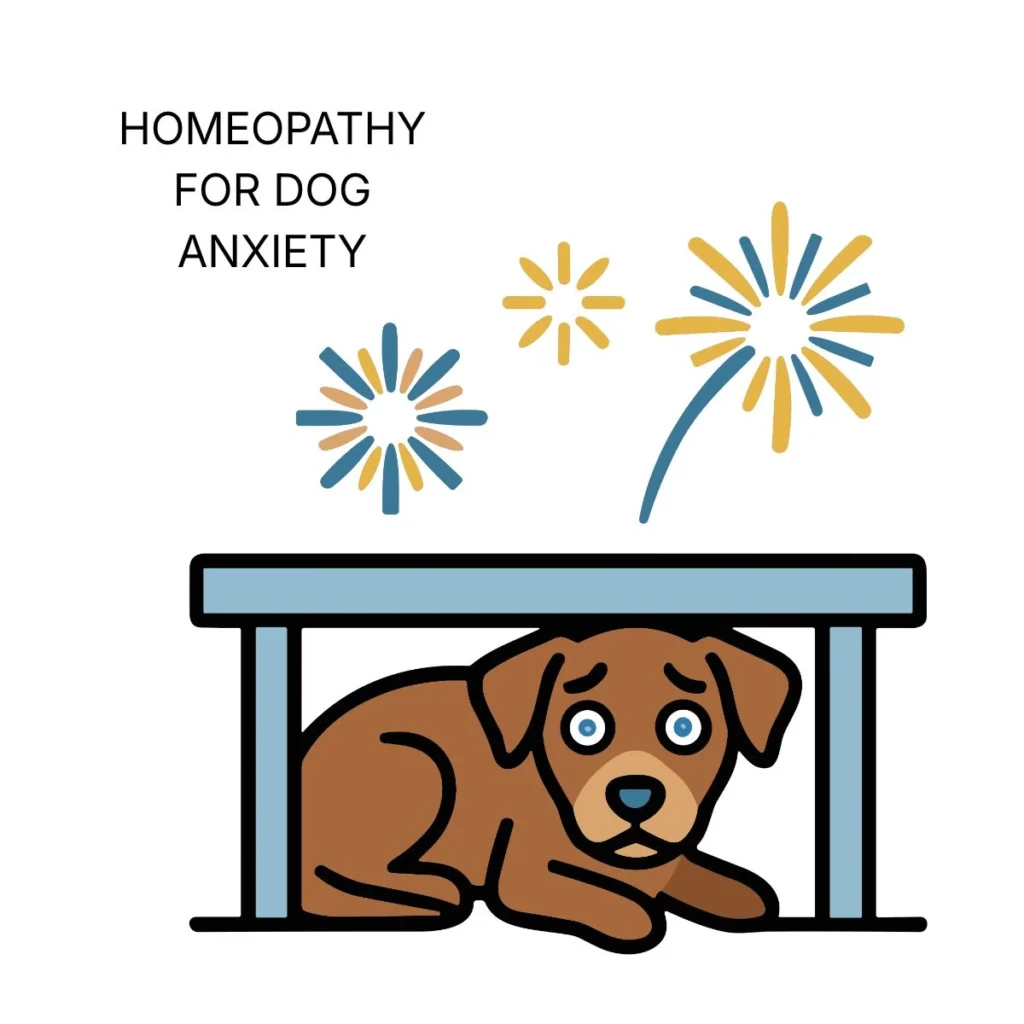
Table of Contents
ToggleWhy Do Dogs Develop Anxiety?
Dogs are social animals. Their sense of safety is often closely connected to familiar people, surroundings, routines and sounds.
Anxiety can develop for several reasons:
- Separation from an owner or familiar companion.
- Loud noises such as thunder, fireworks or construction sounds.
- Changes in the household or daily routine.
- Moving to a new home.
- Previous frightening experiences.
- Lack of gradual exposure to unfamiliar situations.
- Age-related changes or underlying medical problems.
An important detail is that anxiety does not always look like fear.
One dog may tremble and hide. Another may become unusually active, bark excessively or repeatedly walk around the house.
Sometimes, what appears to be a behavioural problem is actually an expression of physical discomfort. Pain, urinary problems, hearing changes and other medical conditions can affect behaviour. A veterinary examination is therefore an important first step, especially when anxiety begins suddenly.
Separation Anxiety: When Your Dog Cannot Relax Without You
Separation anxiety is a distress response that occurs when a dog is separated from an attachment figure or left alone.
It is more than simply missing its owner.
A dog with separation-related distress may become anxious even before the owner leaves.
Common signs of separation anxiety
Look for these behaviours:
- Following the owner from room to room.
- Becoming restless when the owner picks up keys or puts on shoes.
- Barking, whining or howling after the owner leaves.
- Scratching or chewing doors and windows.
- Excessive drooling or panting.
- Refusing food when left alone.
- Urinating or passing stools indoors despite being toilet-trained.
- Trying to escape from a room or enclosure.
A lesser-known sign: Anxiety before departure
Some dogs learn to recognise small signals associated with their owner’s departure.
For example, picking up a handbag, switching off lights, changing clothes or putting on shoes may trigger anxiety.
The dog is not necessarily reacting to the absence itself. It may have learned to associate these everyday actions with being left alone.
This is why observing what happens before the owner leaves can provide valuable information.
What can help?
- Practise very short periods of separation and gradually increase the duration.
- Avoid making departures and returns overly dramatic.
- Provide safe enrichment activities when appropriate.
- Create a comfortable resting area.
- Avoid punishment for destructive behaviour.
- Consider a veterinary behaviourist if the distress is significant.
A dog with severe separation anxiety may need a structured behaviour programme and veterinary treatment. Simply leaving the dog alone for longer periods to make it accustomed to separation can worsen distress.
Thunderstorm Anxiety: Why Are Some Dogs Afraid of Rain?
Thunderstorm fear, sometimes called storm phobia, is a common form of noise-related anxiety.
Interestingly, dogs may react to a storm before humans notice anything unusual.
Their sensitivity to environmental changes may contribute to this behaviour.
What makes thunderstorms frightening?
Thunderstorms involve several potential triggers:
- Sudden loud sounds
Thunder can be unpredictable. A sudden booming sound may trigger a strong fear response.
- Changes in atmospheric pressure
Dogs may react to environmental changes associated with approaching storms. However, individual sensitivity varies, and it is not always possible to identify the exact trigger.
- Lightning flashes
Some dogs become frightened by sudden changes in brightness, particularly when lightning flashes illuminate a room.
- Static electricity
Static electricity has been suggested as another possible contributor to storm-related distress in some dogs, although it does not explain every case.
- Learned fear
A dog that has experienced a frightening storm may begin associating dark clouds, wind or rain with danger.
Signs of thunderstorm anxiety
- Trembling and shaking.
- Hiding in bathrooms, cupboards or under furniture.
- Excessive panting.
- Pacing around the house.
- Clinging to the owner.
- Barking or whining.
- Trying to escape.
- Refusing food.
- Excessive salivation.
Some dogs develop a particularly strong reaction over time. They may become frightened by dark clouds or strong winds even before thunder begins.
This is why early recognition and appropriate support are important.
Homeopathy for Dog Anxiety: An Individualized Approach
Homeopathy approaches anxiety by considering the overall pattern of symptoms rather than selecting a remedy based only on the diagnosis.
For example, two dogs may both fear thunderstorms but behave very differently.
- One trembles, hides and seeks physical contact.
- Another becomes restless and tries to escape.
- A third becomes unusually clingy and refuses to stay alone.
In traditional homeopathic practice, these differences are considered during remedy selection.
The dog’s temperament, triggers, physical reactions, intensity of fear and individual behaviour may all be relevant.
The following remedies are commonly discussed in homeopathic materia medica in connection with fear, nervousness and anxiety. Their inclusion describes traditional homeopathic indications, not proven effectiveness in treating canine anxiety.
Common Homeopathic Remedies Traditionally Considered for Dog Anxiety
Phosphorus
Phosphorus is traditionally associated with sensitive, affectionate and impressionable individuals.
In homeopathic descriptions, a Phosphorus-type dog may show:
- Strong attachment to familiar people.
- Fear of being left alone.
- Sensitivity to sudden noises.
- Nervousness during thunderstorms.
- A tendency to seek company and reassurance.
Such a dog may become noticeably unsettled when its favourite person leaves the house.
Aconitum napellus
Aconitum is traditionally associated with sudden and intense fear.
It may be considered in homeopathic practice when the anxiety begins abruptly, particularly following a frightening experience.
The traditional symptom picture may include:
- Sudden panic.
- Restlessness.
- Agitation after a loud noise.
- Trembling and heightened fear.
- A frightened expression.
For example, a dog that becomes extremely frightened after an unexpected thunderclap may present a pattern that prompts consideration of Aconitum.
Gelsemium sempervirens
Gelsemium is traditionally associated with anticipatory fear and nervousness.
The classical homeopathic picture may include:
- Trembling.
- Weakness associated with fear.
- Quiet withdrawal.
- Reluctance to move.
- Anxiety before an anticipated event.
A dog that becomes unusually quiet, shaky or withdrawn before a storm may show features traditionally associated with this remedy.
Argentum nitricum
Argentum nitricum is traditionally discussed in relation to anticipatory anxiety and nervous restlessness.
The classical picture may include:
- Pacing.
- Impatience.
- Restlessness before an expected event.
- Nervous excitement.
- Impulsive behaviour during anxiety.
A dog that becomes restless before its owner leaves or reacts anxiously to predictable changes in routine may have features worth exploring during an individualized assessment.
Stramonium
Stramonium is traditionally associated with intense terror, particularly fear accompanied by a strong need for safety.
The classical homeopathic picture may include:
- Extreme fright.
- Panic in darkness.
- Seeking protection.
- Intense reactions to sudden noises.
- Agitated or distressed behaviour.
A dog that becomes terrified during thunderstorms and desperately seeks a safe hiding place may present some features associated with this traditional remedy picture.
Arsenicum album
Arsenicum album is traditionally associated with restlessness, insecurity and a desire for reassurance.
The classical picture may include:
- Repeatedly seeking the owner’s presence.
- Difficulty settling.
- Restlessness when alone.
- Sensitivity to changes in surroundings.
- A tendency to remain close to familiar people.
A dog that repeatedly moves around the house and struggles to settle without its owner may show features traditionally associated with Arsenicum album.
Pulsatilla nigricans
Pulsatilla is traditionally associated with affectionate, gentle and companionship-seeking temperaments.
The homeopathic picture may include:
- Strong desire for company.
- Clinginess.
- Seeking comfort from familiar people.
- Distress when left alone.
- A gentle or emotionally sensitive temperament.
It may be considered when the dog’s overall behavioural pattern resembles this traditional picture.
Important: These remedy descriptions are traditional materia medica profiles. They are not a prescription guide, and no remedy or potency should be selected solely from an online symptom list. Veterinary assessment and an individualized discussion with a qualified veterinary professional are important.
How to Comfort an Anxious Dog During a Thunderstorm
Alongside any treatment plan, the home environment can make a meaningful difference to a frightened dog.
Try these practical measures:
Create a safe hiding place
Some dogs naturally seek enclosed spaces when frightened. Provide access to a comfortable, secure area where the dog can rest without being disturbed.
Close windows and curtains
This may reduce outside noise and visual stimulation from lightning.
Use background sound
A fan, television or gentle background music may help reduce the contrast between indoor quiet and sudden thunder.
Stay calm and reassuring
Speak gently and allow your dog to remain near you if it seeks comfort. There is no need to punish or scold a frightened animal.
Consider a pressure wrap
Some dogs may find a properly fitted anxiety wrap comforting. It should never restrict breathing, movement or circulation, and it should be introduced gradually.
Prepare before the storm
If your dog has a known fear of thunderstorms, prepare its safe area before the weather becomes severe.
For dogs with intense storm phobia, ask a veterinarian about a structured noise-anxiety treatment plan. Medication may be appropriate in some cases.
Can Separation Anxiety Be Prevented?
Not every case can be prevented, but healthy routines and gradual training can help dogs develop confidence.
Consider these habits:
- Teach your puppy to spend short, comfortable periods independently.
- Introduce alone-time gradually.
- Provide regular physical activity appropriate for the dog’s age and health.
- Offer mental stimulation through safe toys and scent-based games.
- Maintain a predictable daily routine.
- Avoid using punishment for anxiety-related behaviour.
One interesting activity is a simple scent game.
Hide a few pieces of your dog’s usual food in an appropriate puzzle toy or safe sniffing activity. Allowing the dog to use its nose can provide mental engagement and encourage independent activity.
However, enrichment is not a replacement for treatment when a dog experiences severe separation distress.
When Should You Consult a Veterinarian?
Anxiety should not automatically be treated as a behavioural issue.
Seek veterinary advice when:
- Your dog develops sudden or unexplained anxiety.
- It injures itself while trying to escape.
- It refuses food or water for a prolonged period.
- It experiences severe panting, distress or collapse.
- Destructive behaviour occurs whenever it is left alone.
- Fear becomes progressively worse.
- There are changes in sleep, appetite, urination or mobility.
Severe separation anxiety and storm phobia can significantly affect a dog’s welfare. A veterinarian can assess possible medical causes and recommend behavioural treatment or medication when needed.
Homeopathy may be explored as a complementary approach with an appropriately qualified professional, but it should not replace proven veterinary care or delay treatment. There is not reliable clinical evidence that homeopathic remedies treat separation anxiety or thunderstorm phobia in dogs. Never stop prescribed medication or delay urgent care because of a homeopathic treatment plan.
Frequently Asked Questions
Can homeopathy help dogs with separation anxiety?
Some pet owners explore homeopathy for dogs with separation-related distress. Traditional homeopathic practice uses individualized remedy selection based on temperament and symptoms. However, reliable clinical evidence establishing its effectiveness for separation anxiety is lacking. Veterinary behavioural assessment remains important.
Which homeopathic remedy is traditionally used for thunderstorm fear in dogs?
Aconitum, Phosphorus, Gelsemium and Stramonium are among the remedies traditionally discussed for different patterns of fear. The choice in homeopathic practice depends on the complete symptom picture, not simply the presence of thunderstorm anxiety.
Why does my dog hide in the bathroom during thunderstorms?
Bathrooms may feel safer because they are often enclosed, have fewer windows and provide a sheltered environment. Some dogs naturally choose such spaces when frightened. Allow your dog access to a safe hiding place rather than forcing it to come out.
Why does my dog become anxious before I leave home?
Dogs can learn to associate everyday actions, such as picking up keys or putting on shoes, with their owner’s departure. These signals may trigger anxiety before the owner has actually left.
Can separation anxiety develop in adult dogs?
Yes. Separation-related distress can develop at different stages of life. Changes in routine, relocation, a change in household members or previous frightening experiences may contribute.
Should I leave my dog alone to overcome separation anxiety?
Not by forcing it to tolerate prolonged distress. Gradual, carefully planned separation training is generally more appropriate. Severe cases may need professional behavioural support.
Final Thoughts
A dog that trembles during thunderstorms or becomes distressed when its owner leaves is not being naughty or deliberately difficult. It may be experiencing genuine fear.
The first step is to understand what triggers the anxiety and how the dog expresses it. Some dogs need gradual independence training, others need a safe environment during storms, and some require professional veterinary support.
Homeopathy offers a traditional individualized framework for considering emotional and behavioural patterns, with remedies such as Aconitum, Phosphorus, Gelsemium and Stramonium commonly discussed in materia medica.
Above all, patience, observation and appropriate veterinary care help create a safer and more reassuring environment for your four-legged companion.