
When parents first hear the word autism, something shifts.
There is confusion.
There is fear.
There is guilt.
There are late-night Google searches.
Autism Spectrum Disorder (ASD) is a neurodevelopmental condition.
It affects:
- Communication
- Social interaction
- Sensory processing
- Behavioral regulation
- Emotional flexibility
It is called a “spectrum” because no two children are the same.
One child may not speak.
Another may speak fluently but struggle socially.
One may avoid eye contact.
Another may maintain eye contact but not understand emotional cues.
Autism is not caused by parenting.
It is not caused by lack of love.
It is not caused by one mistake.
It is a difference in how the brain processes information.
And this is where understanding must begin.
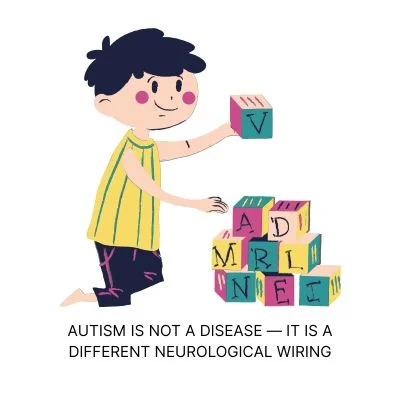
Table of Contents
ToggleWhy Many Parents Look Beyond Conventional Care
Standard management for autism often includes:
- Speech therapy
- Occupational therapy
- Behavioral therapy (ABA)
- Special education support
- Sensory integration therapy
These are essential and often very helpful.
But many parents notice something deeper:
“My child still seems internally unsettled.”
“There are emotional storms that therapy doesn’t explain.”
“Sleep is disturbed.”
“Anxiety is intense.”
“The behavior shifts unpredictably.”
Parents are not rejecting therapy.
They are looking for something that supports the child internally.
That is where homeopathy enters the conversation.
How Homeopathy Understands Autism
Homeopathy does not treat “autism” as a label.
It looks at:
- The individual child
- The child’s unique nervous system pattern
- Emotional responses
- Sensory sensitivity
- Birth history
- Developmental history
- Family predispositions
- Environmental triggers
Homeopathy sees autism not as a structural defect, but as a functional imbalance in regulation.
Regulation of:
- Sensory input
- Emotional processing
- Social response
- Sleep-wake cycle
- Stress handling
The goal is not to erase personality.
The goal is to improve regulation.
What Does “Regulation” Mean in Autism?
Many children with autism struggle with:
- Overreaction to sound or light
- Sudden emotional meltdowns
- Difficulty transitioning between tasks
- Obsessive repetition
- Extreme rigidity
- Hyperfocus or complete distraction
- Sleep irregularities
- Digestive sensitivity
These are regulatory challenges.
The nervous system either:
- Overfires
or - Under-responds
Homeopathy aims to gently stimulate self-correction within the nervous system.
Not suppression.
Not sedation.
Not forcing behavior.
But encouraging balance.
Is There Scientific Support?
This is where we must be honest and intelligent.
Autism research in homeopathy is still limited compared to mainstream medicine. However:
- Some small clinical studies suggest improvement in behavior and communication.
- Case reports document individual improvements.
- Observational studies show better emotional regulation in certain children.
But homeopathy does not claim to “cure autism.”
It claims to improve:
- Eye contact
- Speech development (in some cases)
- Social interaction
- Emotional stability
- Sleep quality
- Anxiety levels
- Sensory tolerance
Results vary.
Individualization is key.
What Parents Should Realistically Expect
Let us speak clearly.
Homeopathy does not:
- Change a child’s identity
- Turn a non-verbal child verbal overnight
- Replace structured therapy
- Offer instant transformation
What it may offer:
- Gradual improvement in responsiveness
- Reduced intensity of meltdowns
- Improved sleep
- Better eye contact
- More flexible behavior
- Increased emotional calmness
- Improved engagement with therapy
Progress is gradual.
Subtle changes matter.
Direction is more important than speed.
How a Homeopathic Case for Autism Is Taken
This surprises many parents.
The consultation is detailed.
The practitioner may ask about:
- Pregnancy history
- Delivery complications
- Early milestones
- Vaccination reactions (if any)
- Food preferences
- Sleep patterns
- Sensory triggers
- Fears
- Behavioral patterns
- Emotional responses
- Family mental health history
Why?
Because homeopathy individualizes.
Two children with autism may receive completely different treatment.
The focus is the child — not the diagnosis.
Psychological and Emotional Aspects in Autism
Autism is not just speech delay.
It is a complex neurological pattern.
Children may experience:
- Sensory overload
- Anxiety without explanation
- Social confusion
- Internal frustration due to communication difficulty
- Hyperawareness of small changes
- Emotional flooding
Parents sometimes misinterpret behavior as stubbornness.
Often, it is overwhelmed.
Homeopathy aims to reduce that internal overwhelm.
When overwhelm reduces:
- Speech may improve
- Eye contact may improve
- Learning becomes easier
- Emotional expression becomes safer
Why Early Intervention Matters
The developing brain is plastic.
Neuroplasticity is strongest in early years.
Supporting regulation early may:
- Improve developmental trajectory
- Support therapy responsiveness
- Reduce severity of later complications
- Improve emotional bonding
Homeopathy is often considered safest in children because:
- It is non-toxic
- It does not chemically sedate
- It does not create dependency
But it must be prescribed responsibly.
Common Questions Parents Ask
Can homeopathy cure autism?
- Autism is a neurodevelopmental difference, not an infection or injury to remove.
- Homeopathy does not erase autism.
- It may reduce symptom intensity and improve function.
How long does treatment take?
- Months.
- Sometimes years.
- Progress is gradual and layered.
Can it be combined with therapy?
- Yes.
- Homeopathy complements speech therapy, occupational therapy, and behavioral interventions.
Is it safe?
- When prescribed by a qualified practitioner, yes.
What if there is no improvement?
- Treatment may need adjustment.
- Not every case responds the same way.
- Expectation must be realistic.
A Word About False Promises
Parents deserve honesty.
If anyone promises:
- Complete cure
- Guaranteed speech recovery
- Instant transformation
- Permanent removal of autism
Be cautious.
Ethical homeopathy supports.
It does not exaggerate.
Why Some Families Feel It Helps
Parents who report improvement often notice:
- More calmness
- Less aggression
- Improved eye contact
- Better sleep
- Reduced anxiety
- Increased awareness
- More emotional connection
These changes may seem small.
But they are meaningful.
A child sleeping better changes family life.
A child making eye contact changes bonding.
A child having fewer meltdowns changes schooling.
Small shifts can be life-altering.
The Emotional Side of Parenting a Child with Autism
Parents carry invisible weight.
- Comparison with other children
- Social judgment
- Exhaustion
- Financial strain
- Fear of the future
Homeopathy, when integrated thoughtfully, can also help parents feel empowered — because it individualizes, listens deeply, and sees the child as more than a label.
Sometimes, that alone changes perspective.
Final Thoughts
Autism is not brokenness.
It is difference.
The goal is not to make a child “normal.”
The goal is to help the child function, communicate, and feel safe in their own nervous system.
Homeopathy approaches autism through:
- Individualization
- Nervous system regulation
- Emotional balance
- Respect for development
- Long-term support
It is not a miracle.
It is not magic.
It is not a replacement for therapy.
But for some families, it becomes a meaningful part of a comprehensive care plan.
And in autism, comprehensive care matters.