
Eczema and psoriasis are among the most common chronic skin disorders seen in clinical practice.
Although both conditions may produce redness, itching, dryness, and irritation, they differ significantly in their pathology, appearance, progression, and homeopathic remedy selection.
Many patients are confused because both diseases can involve:
• Dry skin
• Scaling
• Itching
• Recurring flare-ups
• Emotional distress
However, from both dermatological and homeopathic perspectives, eczema and psoriasis are fundamentally different conditions.
Understanding these differences is extremely important because:
- Correct diagnosis influences remedy selection
- The nature of inflammation differs
- Skin appearance differs
- Emotional patterns may differ
- Constitutional tendencies vary greatly
Homeopathy does not merely treat “skin disease.”
It studies:
• Type of eruption
• Nature of itching
• Type of discharge
• Scaling pattern
• Emotional state
• Modalities
• Thermal tendencies
• Chronic constitutional background
This individualized understanding often becomes the key to successful management.
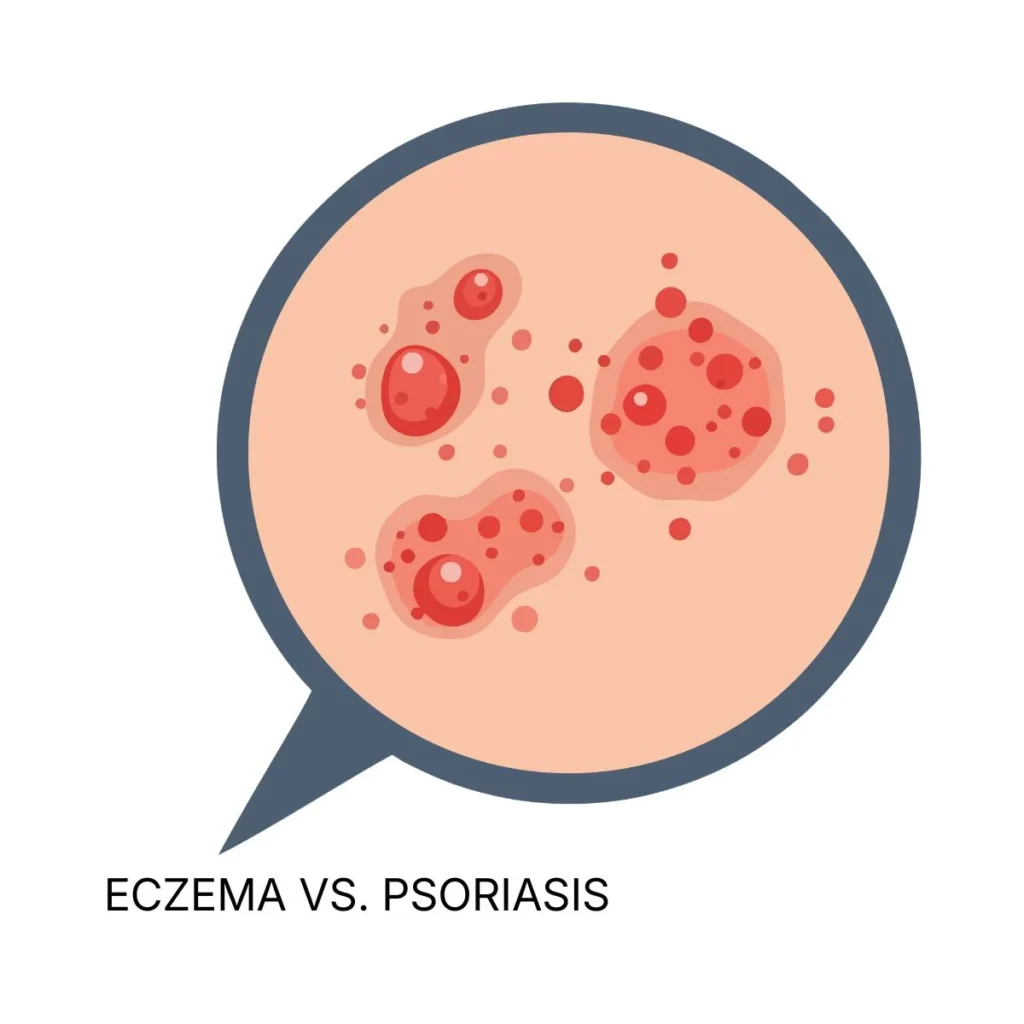
Table of Contents
ToggleWhat is Eczema?
Eczema, also called dermatitis, is an inflammatory skin condition characterized by:
• Intense itching
• Red inflamed skin
• Oozing or moisture
• Cracks and irritation
The skin barrier becomes hypersensitive and reactive.
Eczema often fluctuates with:
• Allergies
• Stress
• Weather
• Food triggers
• Chemical exposure
In many patients, scratching worsens inflammation and may even lead to infection.
What is Psoriasis?
Psoriasis is a chronic autoimmune inflammatory skin disorder involving rapid skin cell turnover.
Instead of oozing inflammation, psoriasis usually produces:
• Thick plaques
• Dry silvery scales
• Well-defined patches
• Excessive skin buildup
Psoriasis is more associated with:
• Immune dysregulation
• Genetic predisposition
• Chronic inflammatory tendencies
Unlike eczema, psoriasis lesions are generally thicker and drier.
Major Differences Between Eczema and Psoriasis
1. Nature of Itching
Eczema
👉 Intense unbearable itching is often the dominant symptom.
Patients scratch continuously, sometimes until bleeding occurs.
Psoriasis
👉 Itching may be mild to moderate, but scaling and dryness are more prominent.
Homeopathic Insight
Severe itching with moisture often points toward eczema remedies, while dry scaling points more toward psoriasis remedies.
2. Skin Appearance
Eczema
- Red inflamed skin
- Moist eruptions
- Oozing fluid
- Cracks and irritation
Psoriasis
- Thick silvery scales
- Dry plaques
- Well-defined borders
- Thickened skin
Homeopathic Insight
The exact appearance of lesions becomes a major prescribing guide.
3. Type of Discharge
Eczema
👉 Oozing, sticky, watery, or crusty discharge is common.
Psoriasis
👉 Usually dry with excessive scaling rather than discharge.
Clinical Difference
Moisture strongly favors eczema diagnosis.
4. Common Locations
Eczema
Often affects:
• Flexural areas
• Neck
• Hands
• Behind knees
• Face in children
Psoriasis
Frequently affects:
• Elbows
• Knees
• Scalp
• Lower back
5. Scaling Pattern
Eczema
Scales are usually thinner and associated with moisture.
Psoriasis
Scales are:
• Thick
• Silvery
• Dry
• Adherent
Homeopathic Observation
Thick adherent scales often guide toward psoriasis remedies like:
• Graphites
• Mezereum
• Kali Ars
6. Emotional Influence
Eczema
Often worsens with:
• Anxiety
• Emotional hypersensitivity
• Allergic tendencies
Psoriasis
More commonly associated with:
• Chronic stress
• Suppressed emotions
• Deep constitutional imbalance
7. Pain and Burning
Eczema
Burning and rawness after scratching are common.
Psoriasis
Tightness, cracking, and soreness dominate more than raw burning.
8. Chronicity
Eczema
May fluctuate rapidly with allergens and environment.
Psoriasis
Usually follows a more chronic recurring course.
Homeopathic Understanding of Eczema
Homeopathy views eczema as a hypersensitive inflammatory reaction involving both the skin and internal constitutional tendencies.
Important factors considered include:
• Type of discharge
• Itching severity
• Time of aggravation
• Emotional triggers
• Food sensitivities
The goal is not only to reduce itching but also to reduce recurrence tendency.
Common Homeopathic Remedies for Eczema
For thick sticky eruptions with cracks and oozing.
For intense burning itching worse from heat.
For dry cracked eczema worse in winter.
For vesicular itchy eruptions relieved temporarily by hot applications.
For crusty eruptions with pus beneath.
Homeopathic Understanding of Psoriasis
Psoriasis is often viewed as a deeper constitutional inflammatory tendency involving abnormal skin proliferation and chronic immune imbalance.
Homeopathic treatment focuses on:
• Scaling pattern
• Chronicity
• Emotional profile
• Thermal state
• Family tendency
Common Homeopathic Remedies for Psoriasis
Dry scaling with burning and restlessness.
Chronic thick scaling with persistent itching.
Dirty greasy unhealthy skin with recurrent flare-ups.
Stress and emotional suppression linked psoriasis.
Thick unhealthy skin overgrowth tendency.
Can Eczema Turn Into Psoriasis?
Although both conditions differ medically, some patients may show overlapping symptoms over time.
Improper suppression of chronic skin eruptions may alter skin expression patterns, making careful evaluation extremely important.
Why Proper Diagnosis Matters in Homeopathy
Two patients with “skin disease” may require completely different remedies.
Correct differentiation helps:
• Better remedy selection
• Faster relief
• Reduced recurrence
• Improved constitutional management
This is why individualized case-taking remains central in classical homeopathy.
Lifestyle Tips for Both Conditions
- Avoid excessive scratching
- Maintain hydration
- Reduce stress
- Use mild skin products
- Improve sleep quality
- Identify personal triggers
Frequently Asked Questions
Which is more itchy: eczema or psoriasis?
Eczema usually produces more intense itching than psoriasis.
Is psoriasis autoimmune?
Yes. Psoriasis is considered an autoimmune inflammatory condition.
Can homeopathy help both eczema and psoriasis?
Yes. Homeopathy may help reduce itching, inflammation, scaling, and recurrence tendency through individualized treatment.
Which homeopathic remedy is best for eczema?
Common remedies include:
• Graphites
• Sulphur
• Rhus Tox
• Petroleum
The exact prescription depends on individual symptoms.
Which homeopathic remedy is best for psoriasis?
Common remedies include:
• Arsenicum Album
• Kali Ars
• Psorinum
• Natrum Mur
Selection depends on constitutional presentation.
Final Thoughts
Although eczema and psoriasis may appear similar superficially, they differ greatly in pathology, appearance, inflammation pattern, and constitutional tendencies.
Homeopathy recognizes these subtle but important distinctions and selects remedies according to the complete symptom picture rather than the disease label alone.
Careful observation of skin texture, discharge, scaling, emotional state, modalities, and chronic tendencies remains the key to individualized homeopathic prescribing.