
Table of Contents
ToggleWhy Borrelia Nosode Became Important in Modern Homeopathy
In recent decades, one infectious illness has drawn particular attention in both conventional medicine and homeopathy — Lyme disease.
Caused by the bacterium Borrelia burgdorferi and transmitted through tick bites, this infection may initially produce fever, rash, fatigue, and joint pain.
However, in some individuals the illness does not simply disappear after the acute stage.
Patients may continue to experience a complex pattern of symptoms such as persistent exhaustion, migrating joint pain, nerve sensitivity, mental fog, sleep disturbance, and fluctuating neurological complaints.
These long-lasting patterns of illness began to draw the attention of homeopathic physicians who noticed that certain patients displayed a distinct symptom pattern that seemed to follow Lyme infection.
In response to this emerging clinical picture, homeopathic pharmacies prepared a remedy derived from the organism itself — Borrelia Nosode.
Within homeopathic materia medica, Borrelia Nosode represents an important remedy for conditions involving persistent fatigue, nervous system irritation, migrating pains, and chronic inflammatory states following tick-borne infection patterns.
This remedy is not simply associated with Lyme disease as a diagnosis. Instead, it corresponds to a distinct symptom pattern affecting the nervous system, joints, energy levels, and mental clarity.
Historical Background of Borrelia Nosode in Homeopathy
The bacterium Borrelia burgdorferi was identified in the late twentieth century during investigations into Lyme disease outbreaks in the United States.
As understanding of Lyme disease expanded, homeopathic practitioners began observing that certain chronic symptom patterns appeared after tick-borne infections.
Historically, homeopathy has developed remedies from disease sources when a particular illness leaves a recognizable long-term symptom pattern.
Earlier examples include remedies such as Tuberculinum, Medorrhinum, and Syphilinum, which were introduced after physicians noticed recurring patterns of chronic disease following specific infections.
Following the same reasoning, some homeopathic physicians and pharmacies introduced Borrelia Nosode, prepared from the Lyme organism, to address the chronic symptom picture associated with Lyme infection.
Over time, clinical observations began to accumulate describing patients with:
- migrating joint pain
- persistent fatigue
- neurological irritation
- cognitive fog
- fluctuating inflammatory symptoms
This evolving experience gradually shaped the remedy picture now associated with Borrelia Nosode.
Pharmacy and Preparation of Borrelia Nosode
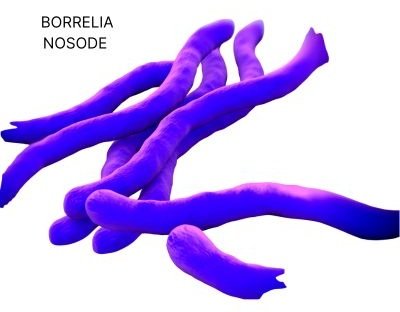
Borrelia Nosode is prepared from the bacterium Borrelia burgdorferi, the microorganism responsible for Lyme disease.
In homeopathic pharmacy, the original biological material undergoes the classical process of potentization, which includes sequential dilution and succussion. Through this process the medicinal preparation is transformed into a homeopathic remedy suitable for therapeutic use.
The final remedy is typically dispensed as:
- medicated lactose pellets
- liquid dilution preparations
Commonly available potencies include:
- 30C
- 200C
- 1M and higher potencies
Because nosodes are considered deep-acting remedies, they are typically prescribed carefully according to the individual symptom pattern rather than repeated frequently.
Pathogenesis and Core Remedy Picture
Borrelia Nosode primarily affects four major systems in the body:
- nervous system
- joints and connective tissues
- energy metabolism
- cognitive and emotional functioning
The remedy picture is characterized by a combination of fatigue, neurological irritation, and migrating inflammatory pain.
A key feature of this remedy is that symptoms often appear shifting, wandering, or fluctuating, reflecting the unpredictable nature of Lyme-related illness patterns.
Characteristic Symptom Picture of Borrelia Nosode
Persistent and Debilitating Fatigue
One of the most striking features of the Borrelia Nosode picture is profound exhaustion that does not improve with rest.
The patient may feel drained even after adequate sleep. Physical activity may worsen fatigue dramatically, and recovery after exertion may take unusually long.
This fatigue is often described as:
- deep and overwhelming
- disproportionate to activity
- accompanied by mental dullness
- associated with weakness in limbs
Many patients feel that their energy reserves never fully recover after illness.
Migrating Joint Pain and Musculoskeletal Discomfort
Joint pain is another defining feature of the Borrelia symptom picture.
Unlike typical arthritis, the pain may shift from one joint to another, appearing in different parts of the body on different days.
Common areas affected include:
- knees
- shoulders
- wrists
- ankles
- neck and spine
The pain may feel aching, burning, or deep within the joints. Some patients experience stiffness upon waking, while others notice worsening pain after physical exertion.
This wandering pattern of joint pain is one of the clinical features that drew attention to the Borrelia remedy picture.
Neurological Irritation and Nerve Sensitivity
Borrelia Nosode often corresponds to conditions involving irritation of the nervous system.
Patients may experience sensations such as:
- tingling in the limbs
- burning nerve pain
- crawling sensations under the skin
- shooting pains along nerves
- hypersensitivity to touch
These symptoms may come and go unpredictably and may affect different parts of the body over time.
Some individuals also report heightened sensitivity to sensory stimuli such as light, sound, or temperature changes.
Brain Fog and Cognitive Slowness
Many individuals fitting the Borrelia remedy picture report difficulty thinking clearly.
Mental symptoms may include:
- difficulty concentrating
- forgetfulness
- slow thinking
- difficulty finding words
- mental exhaustion after small tasks
Patients often describe this as a feeling that their mind is functioning more slowly than before illness.
This cognitive fog may worsen during periods of physical fatigue or stress.
Sleep Disturbance and Unrefreshing Sleep
Sleep problems are common in the Borrelia symptom pattern.
Patients may experience:
- difficulty falling asleep
- restless sleep
- frequent waking during the night
- vivid dreams
- waking unrefreshed despite long sleep
Even after a full night’s sleep, the individual may still feel exhausted.
Fluctuating Symptoms and Unpredictable Illness Pattern
Another important feature of Borrelia Nosode is the changing nature of symptoms.
Symptoms may:
- move between body systems
- appear suddenly and disappear
- worsen periodically without clear reason
- shift between neurological and musculoskeletal complaints
This shifting pattern reflects the chronic inflammatory nature often seen in Lyme-related illness patterns.
Emotional and Psychological Features
Chronic illness patterns associated with Borrelia may also influence emotional health.
Patients may experience:
- irritability due to fatigue
- frustration from persistent symptoms
- anxiety about unpredictable health
- difficulty maintaining focus during conversation
These emotional changes are usually secondary to the physical exhaustion and neurological irritation.
Clinical Situations Where Borrelia Nosode May Be Considered
Homeopathic practitioners may evaluate Borrelia Nosode in cases where a patient presents with:
- history of tick bite followed by chronic illness
- persistent fatigue after infection
- migrating joint pain
- neurological irritation or nerve pain
- cognitive fog and concentration problems
- fluctuating inflammatory symptoms
In these situations the remedy is considered according to the individual symptom pattern, not simply the disease label.
Potency and Dosage
Borrelia Nosode is commonly prescribed in potencies such as:
- 30C
- 200C
- occasionally higher potencies
Because nosodes act deeply in the organism, practitioners often administer the remedy infrequently, observing the patient’s response before repeating the dose.
The exact potency and repetition depend on the individual case.
Relationship with Other Homeopathic Remedies
In homeopathic practice, Borrelia Nosode may appear alongside remedies addressing specific symptom expressions such as:
- joint stiffness
- nervous exhaustion
- chronic inflammatory patterns
- cognitive fatigue
The remedy is therefore often integrated into a broader constitutional treatment plan.
WHAT IS CONSTITUTION IN HOMOEOPATHY?
Final Thoughts
Borrelia Nosode represents one of the modern additions to homeopathic materia medica, reflecting the evolving understanding of chronic illness patterns associated with tick-borne infection.
Its remedy picture centers on persistent fatigue, migrating joint pain, neurological irritation, and cognitive fog—a combination of symptoms that can significantly affect quality of life.
Through careful individualization and clinical observation, homeopathic practitioners have incorporated Borrelia Nosode into their therapeutic approach for patients displaying this characteristic pattern of illness.
As with all homeopathic medicines, the remedy is selected based on the totality of symptoms, allowing treatment to address not just a diagnosis but the unique way illness expresses itself in the individual.